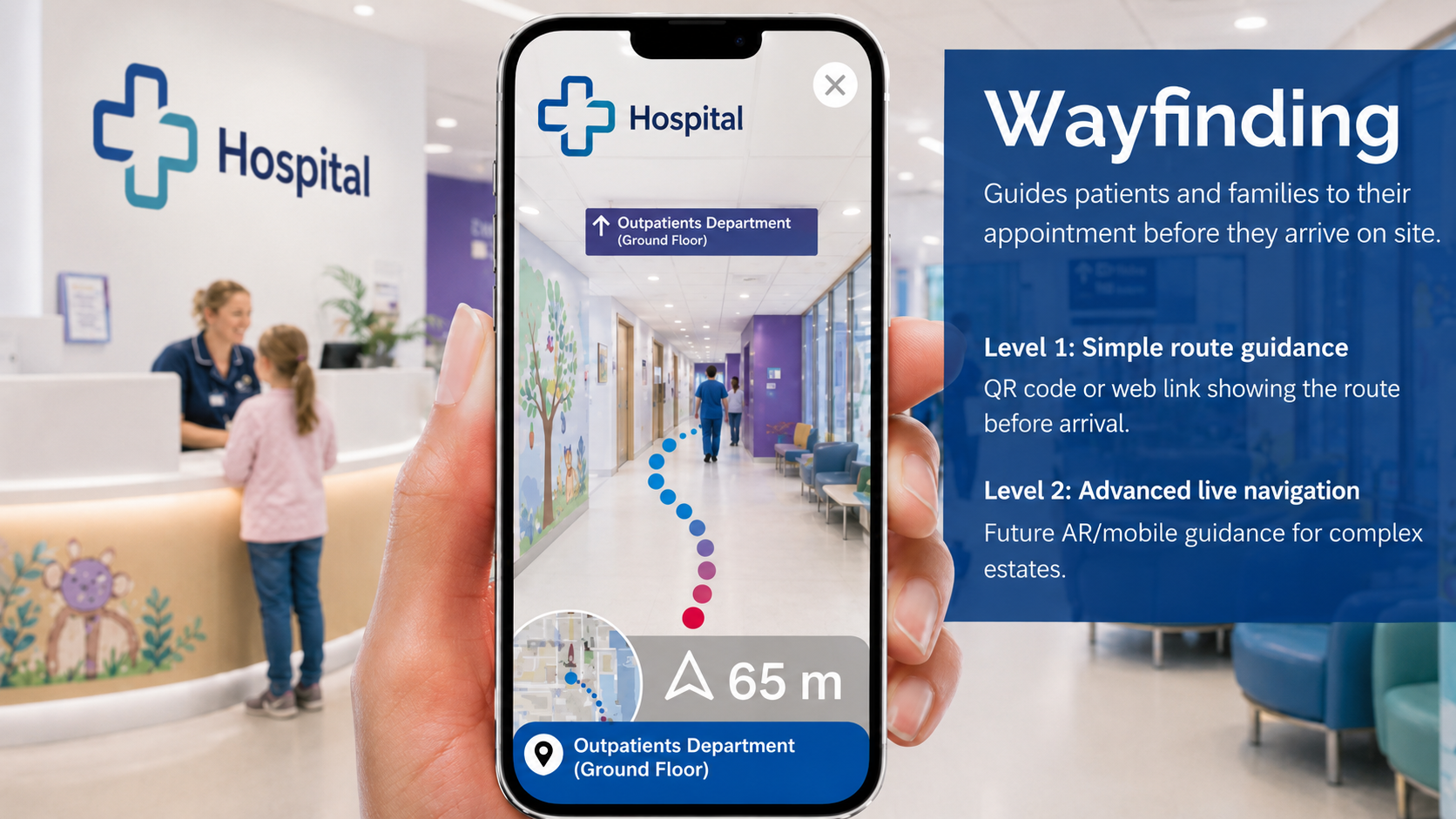
Helping Patients Feel Prepared Before They Arrive
The NHS has become increasingly sophisticated in how it measures performance
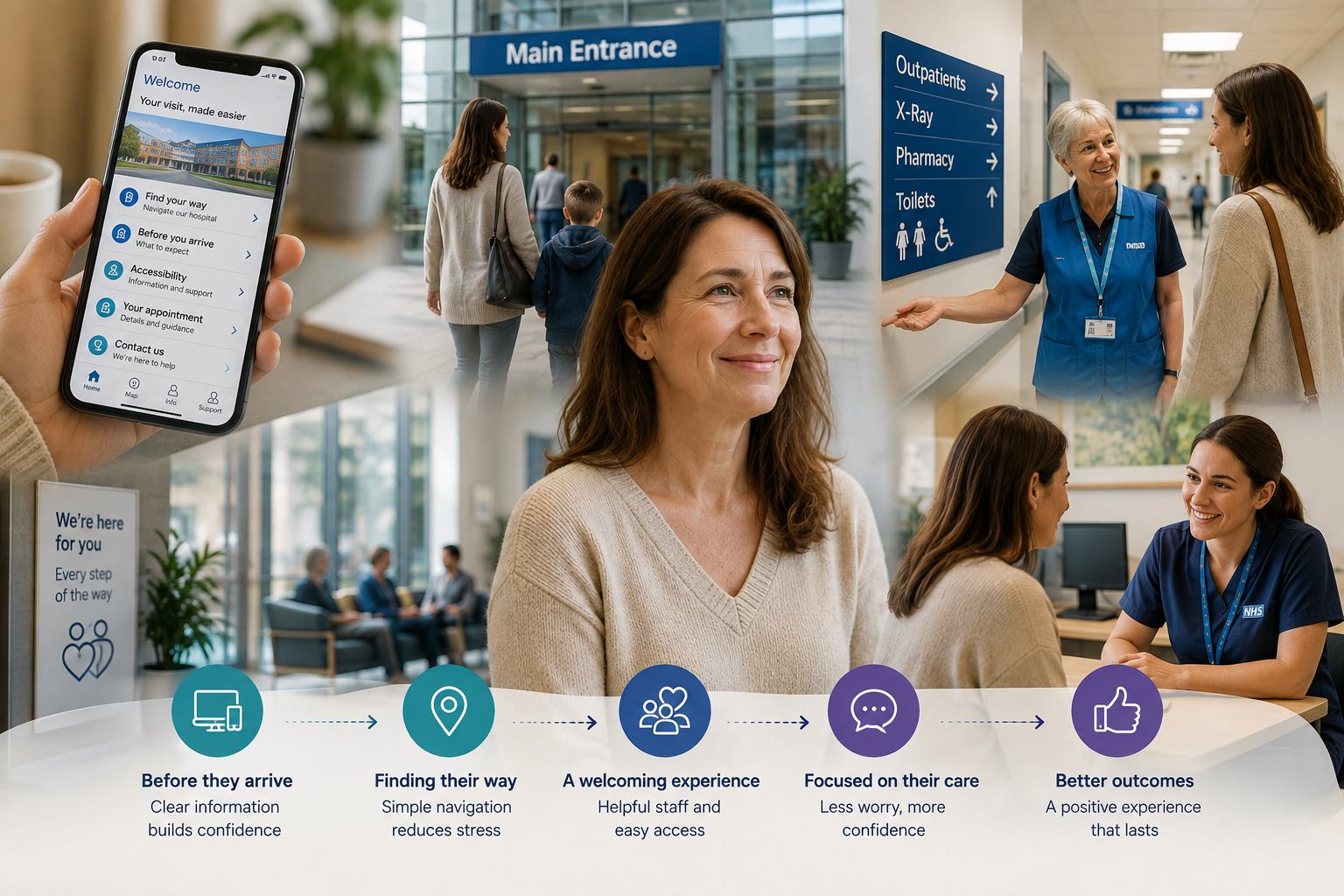
Waiting times, Friends and Family Test scores, outpatient activity, delayed discharges, elective recovery, theatre utilisation, digital maturity, patient flow and operational efficiency all provide valuable insight into how services are performing.
These metrics help organisations improve care, allocate resources and identify areas requiring attention.
Yet there is one part of the patient journey that remains surprisingly difficult to measure.
The moments before a patient arrives.
For most healthcare organisations, the patient journey officially begins when someone enters the hospital, checks in at reception or attends their appointment.
For patients, it starts much earlier.
It starts when the appointment is booked.
The journey patients remember.
Ask patients what they remember about attending hospital and they will often describe much more than the clinical encounter.
They remember struggling to find the correct entrance.
They remember worrying about parking.
They remember walking through unfamiliar corridors wondering if they were heading in the right direction.
They remember feeling anxious because they thought they were late.
These experiences are rarely recorded as operational data, but they shape how patients perceive the organisation before a clinician has even introduced themselves.
That matters because first impressions influence confidence.
Familiarity creates confidence
Hospitals are designed to deliver outstanding clinical care.
They are not always designed to feel familiar.
Most NHS sites have evolved over many years. Buildings have expanded, departments have relocated and services have adapted to changing demand. What makes perfect sense to staff who work there every day can feel overwhelming to someone visiting for the first time.
Patients don't simply need directions.
They need reassurance.
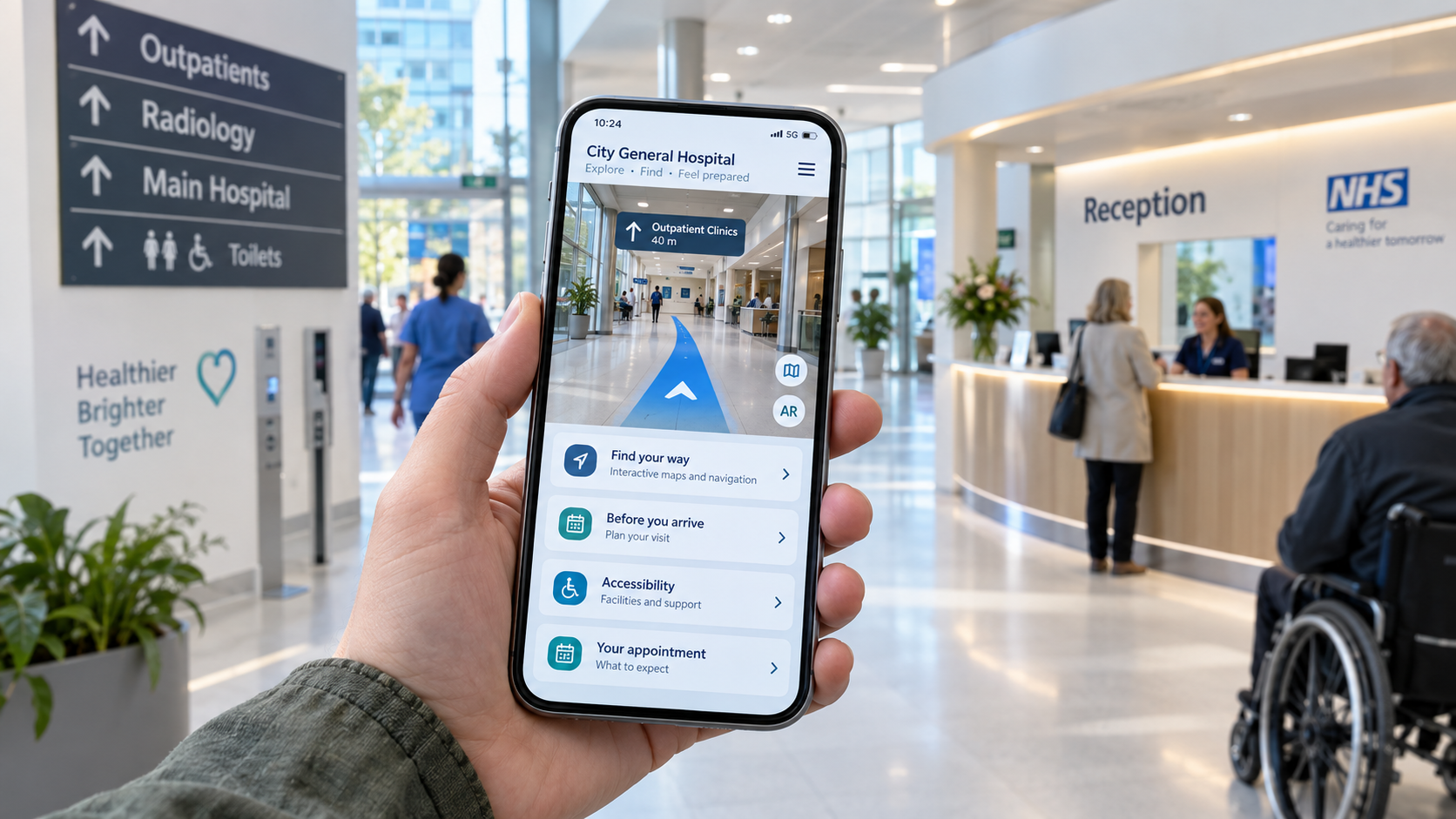
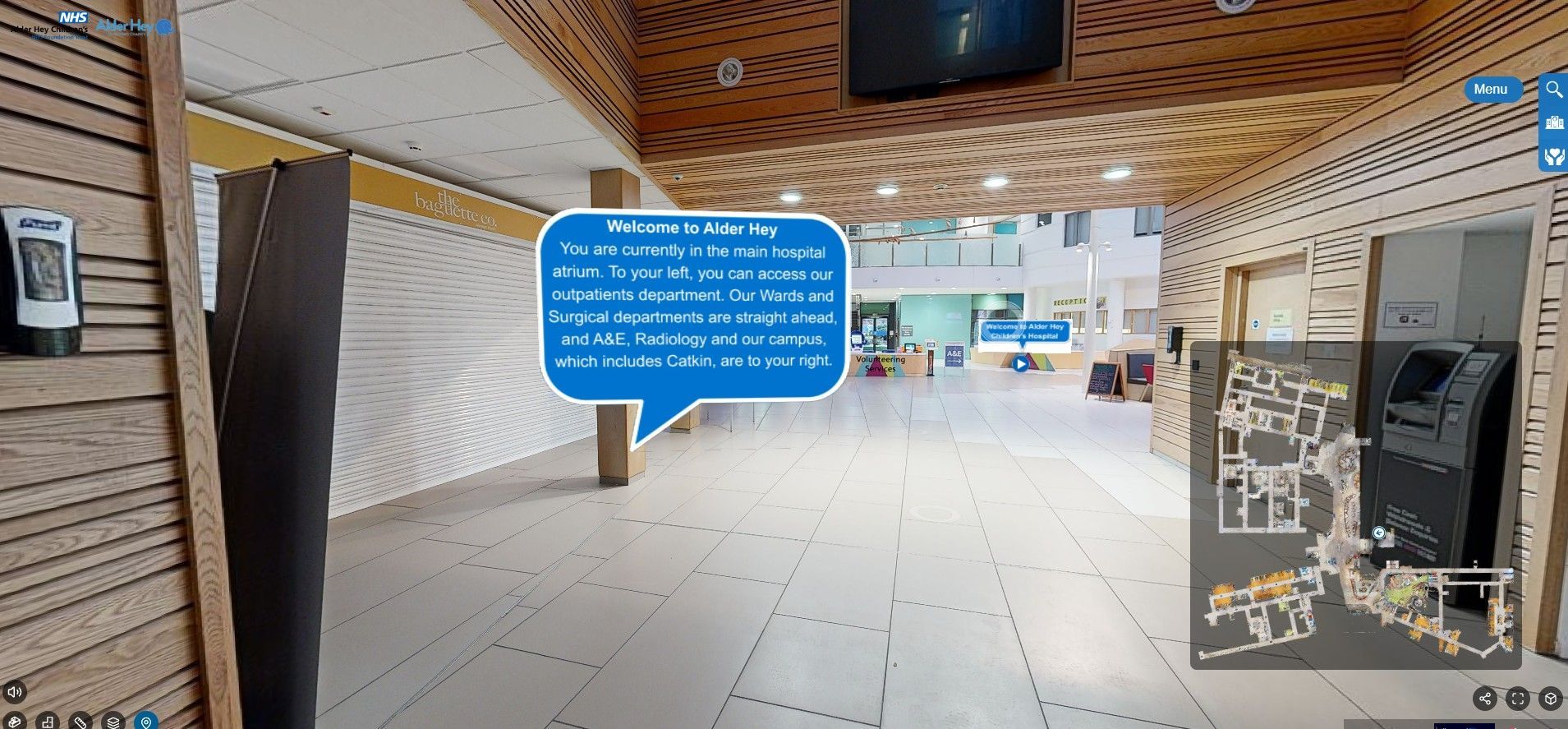
Knowing what an entrance looks like, understanding where reception is located or recognising the route to a clinic before leaving home can reduce uncertainty in ways that written instructions alone often cannot.
The objective is not to replace traditional communication.
It is to make that communication easier to understand.
Wayfinding is really about reducing cognitive load
Wayfinding is often discussed in terms of signage, maps and estates management.
Its real value lies elsewhere.
Every decision a patient has to make on arrival adds to cognitive load.
Am I in the right building?
Do I turn left or right?
Is this the correct reception?
How much further do I need to walk?
For patients already coping with pain, anxiety or uncertainty, these additional decisions can become surprisingly significant.
Reducing unnecessary cognitive effort allows patients to focus on what actually matters; the reason they came to hospital in the first place.
Accessibility is about confidence as well as compliance
Healthcare rightly places great emphasis on accessible environments.
Physical accessibility remains fundamental.
However, accessibility also includes making healthcare environments understandable.
Patients living with dementia, neurodivergent individuals, people with learning disabilities, those with sensory sensitivities and many older adults often benefit from knowing what to expect before they arrive.
Helping someone understand an environment before they encounter it can increase independence and confidence.
That represents a different way of thinking about accessibility—not simply removing physical barriers, but reducing uncertainty.
Operational efficiency often begins with communication
Improving patient experience and improving operational efficiency are sometimes presented as separate objectives.
In practice, they are closely connected.
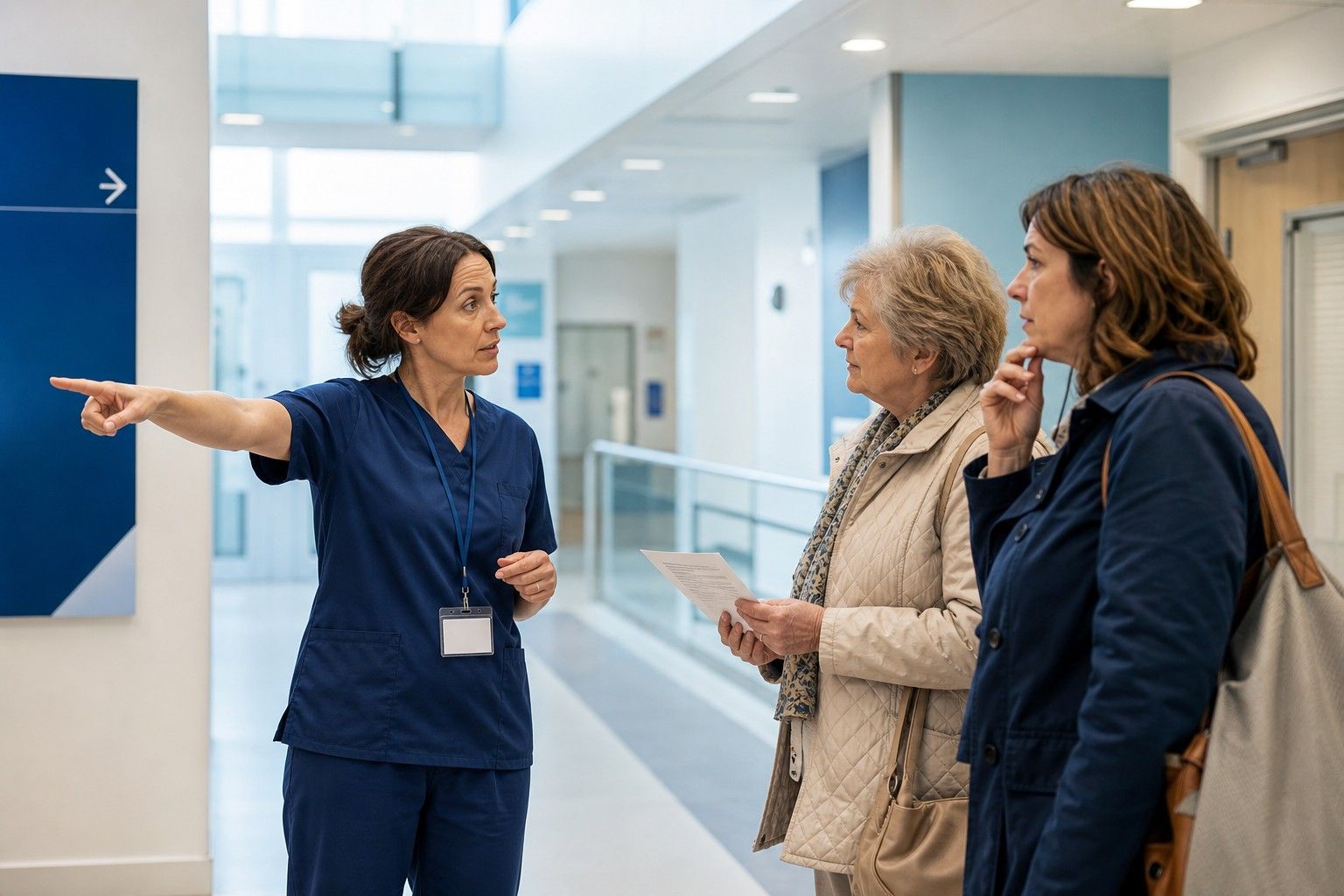
Every patient who asks for directions, arrives at the wrong department or requires assistance navigating a hospital creates additional demand on reception teams, volunteers and clinical staff.
None of these interactions is problematic in isolation.
Across thousands of appointments each week, however, they represent considerable operational effort.
Helping patients arrive better prepared benefits everyone.
Patients experience a calmer journey.
Staff spend less time resolving avoidable navigation issues.
Departments experience fewer unnecessary interruptions.
Sometimes the simplest improvements have the widest operational impact.
A broader definition of digital transformation
Digital transformation has transformed healthcare administration and clinical systems.
The next opportunity may be less about introducing another platform and more about improving how patients experience existing services.
Technology should not simply digitise information.
It should reduce uncertainty.
It should improve communication.
It should support accessibility.
It should make healthcare feel easier to navigate.
Most importantly, it should help patients arrive feeling confident rather than confused.