Wayfinding - never get lost in a hospital again
One of my favourite quotes is “Edison didn’t invent the lightbulb by designing a better candle.”
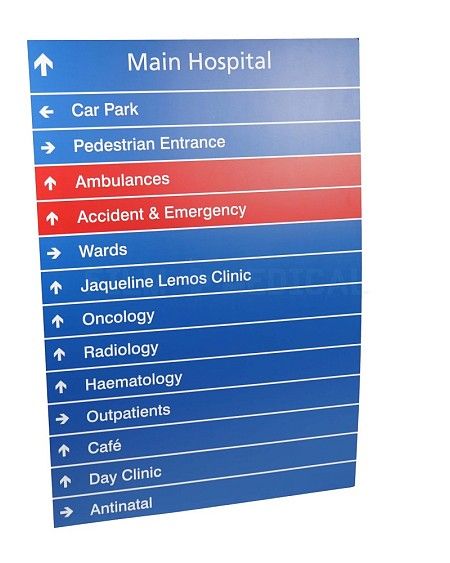
Hospital wayfinding cannot be solved by making their maps better.
Most people think hospital wayfinding is about maps and signposts.
It isn’t.
It is about anxiety.
It is about missed time.
It is about confidence.
It is about whether a patient arrives calm, confused, late, embarrassed, stressed or not at all.
There is a new white paper, “Augmented Reality Indoor Wayfinding in Hospital Environments”, that has done a deep dive into Augmented Reality (AR) based indoor navigation against traditional paper maps in a real hospital setting.
The results are hard to ignore.
Participants using AR navigation:
· Reached their destination faster
· Made fewer wrong turns
· Followed more accurate routes
· Reported lower mental workload
· Experienced lower situational anxiety
· Strongly preferred AR for future hospital visits
In fact, 94% of participants said they would choose AR navigation for a future hospital visit, compared with only 31% who would choose paper maps.
That matters because hospitals are not normal buildings.
They are emotionally loaded environments. People are often visiting because they are worried, unwell, supporting a loved one, or attending an appointment they may already feel nervous about.
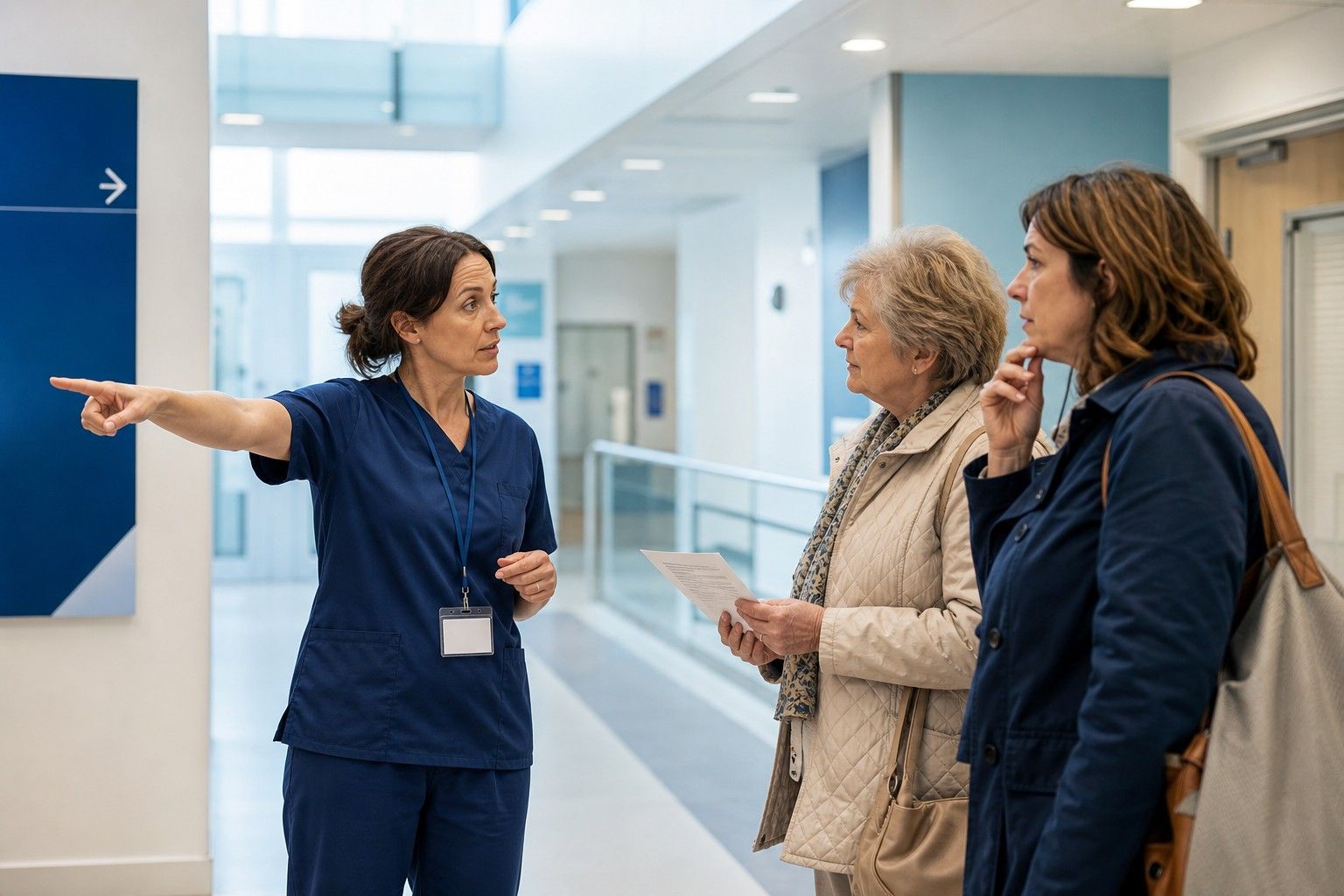
Then we hand them a letter, a postcode, maybe a link to a map on the hospital website, and expect them to find their way through a complex estate of departments, corridors, lifts, junctions and waiting areas.
For some people, that is manageable.
For others, particularly children, older patients, neurodivergent visitors, people with anxiety, people with mobility issues, or families visiting a hospital for the first time, it can be overwhelming.
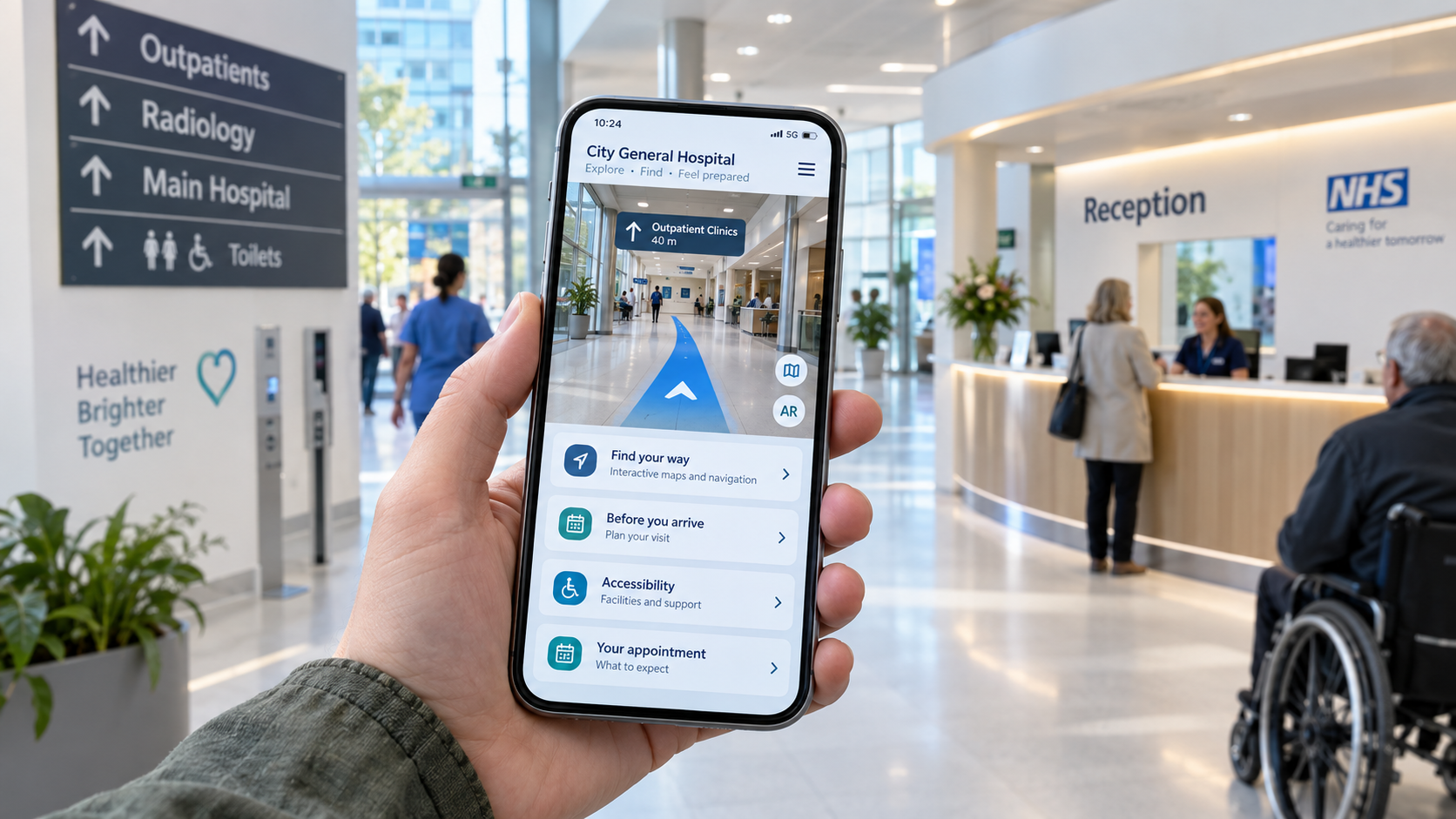
The study found that AR navigation reduced cognitive load because users did not have to interpret an abstract map and translate it into physical movement. Instead, guidance appeared in context, overlaid onto the real environment.
That is the key shift.
From:
“Here is a map on the website or on the wall at the entrance to the hospital. Work it out.”
To:
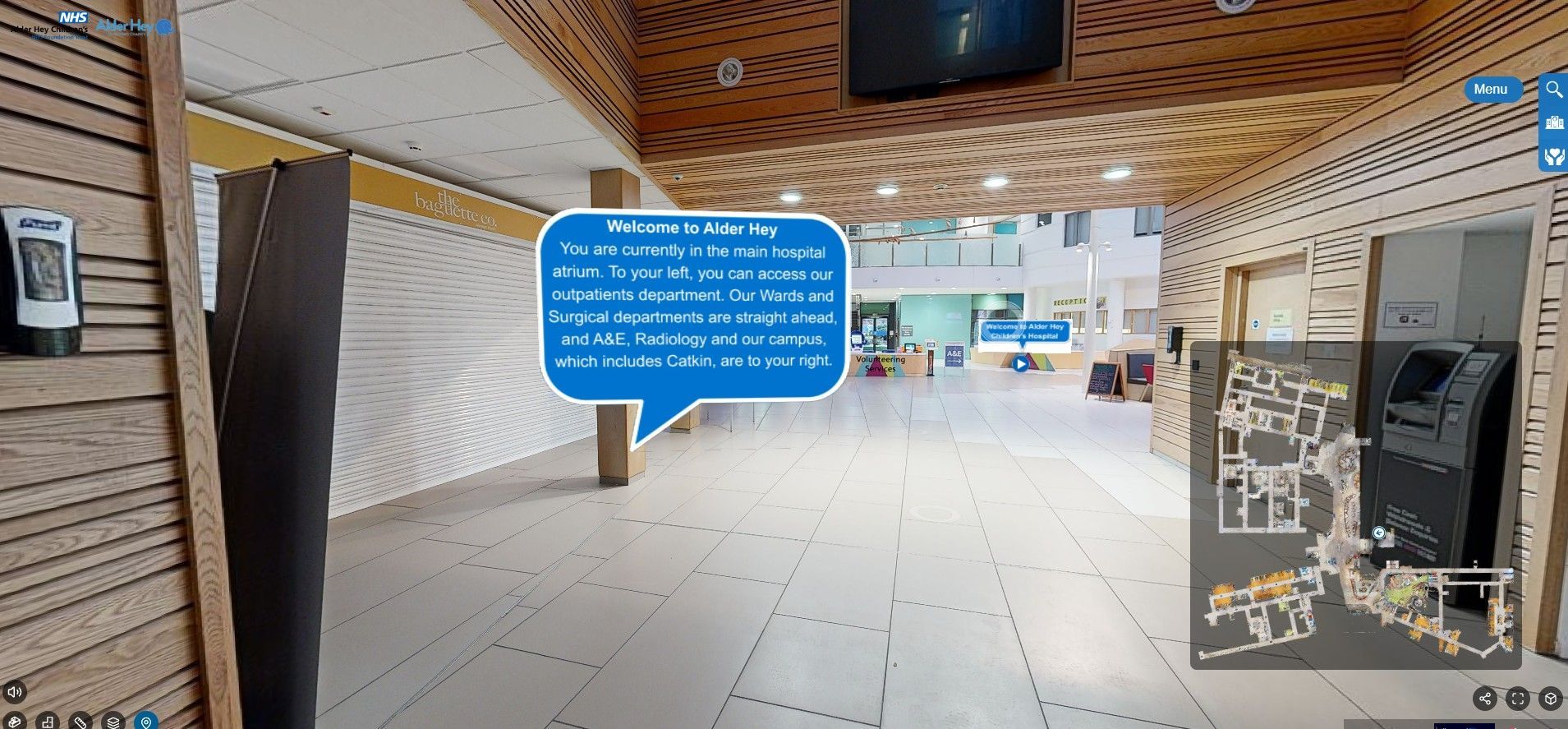
“Here is where you are. Here is where to go next. You are on the right route.”
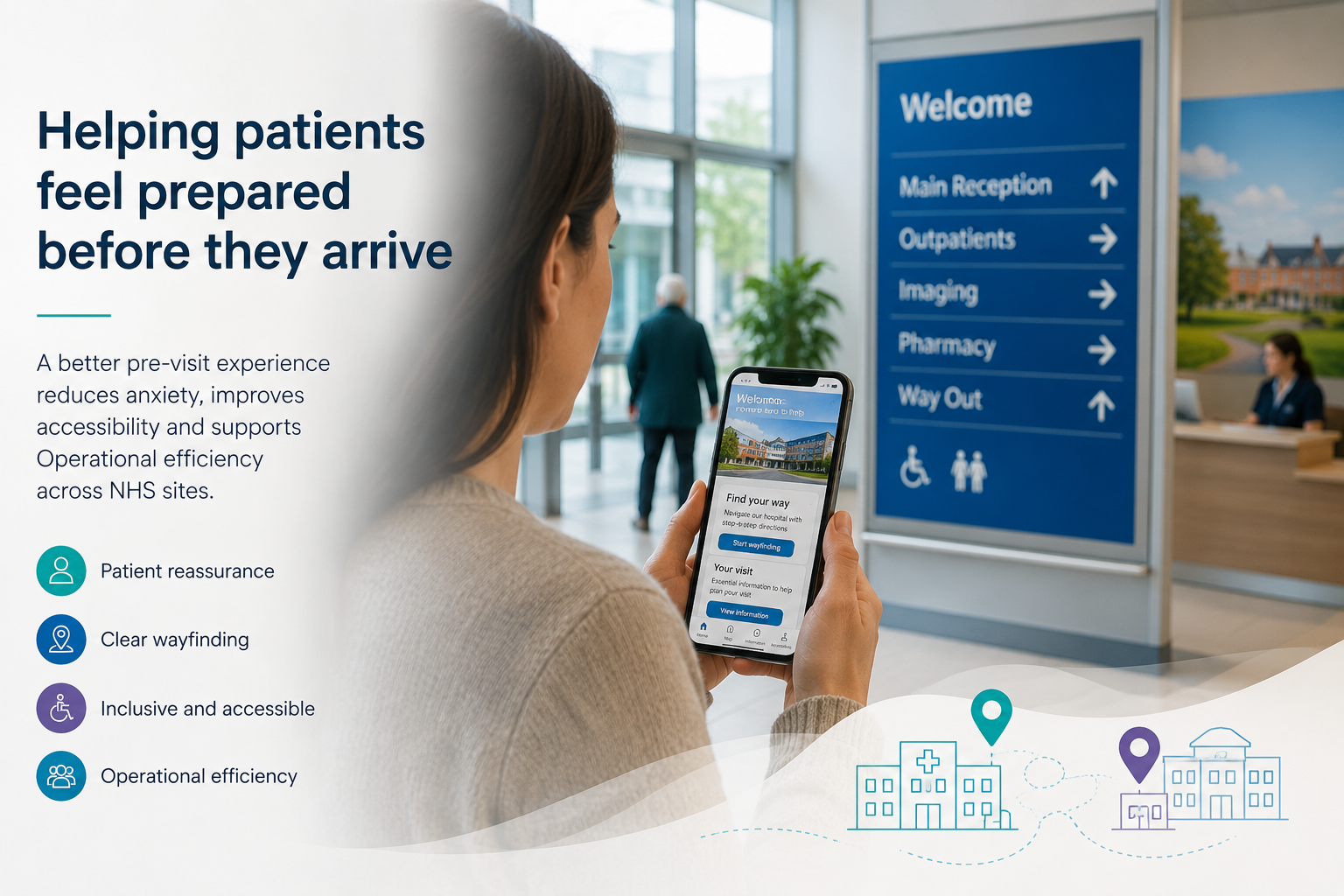
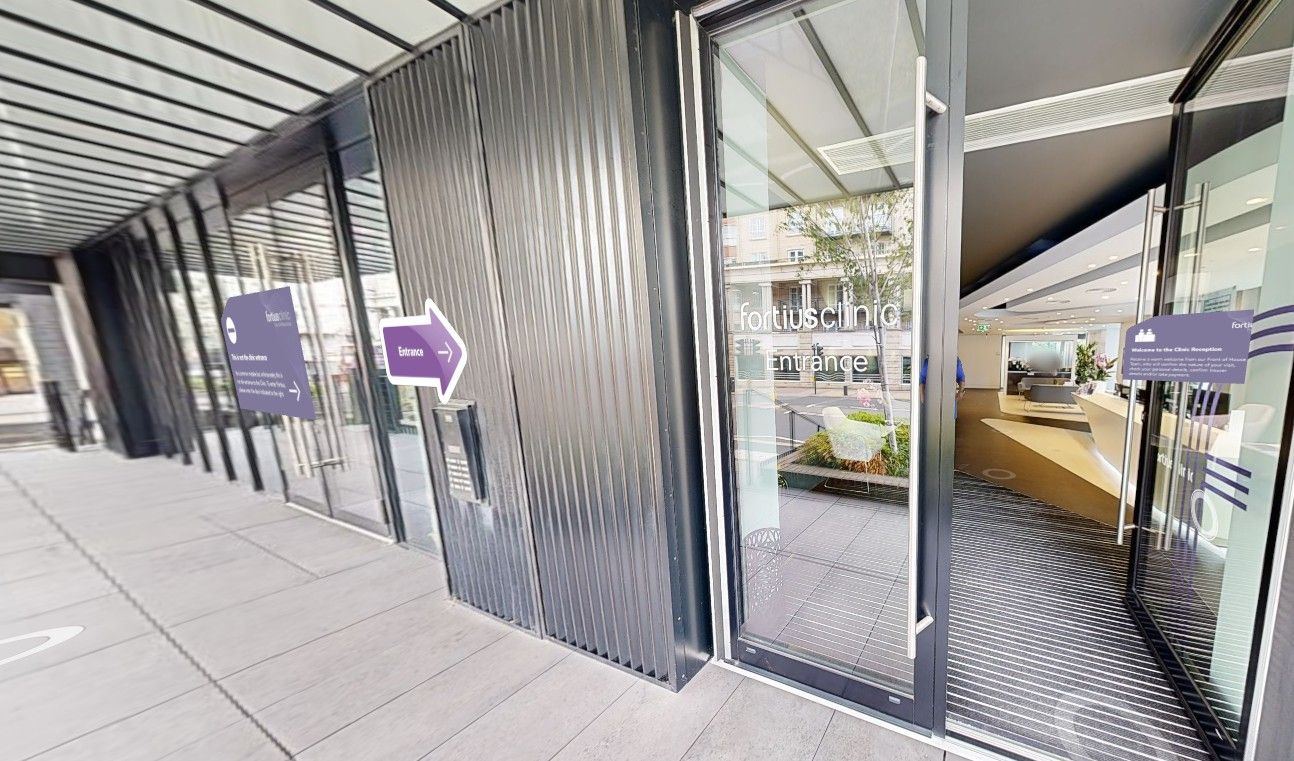
Wayfinding should start before the patient arrives. It should be part of the digital front door. It should connect appointment information, pre-visit preparation, parking, entrances, reception points, lifts, departments and waiting areas into one calm, guided journey.
The research also highlighted an important trade-off: paper-map users developed better memory of the building layout. That tells us AR systems need to be designed carefully. The best solutions should not simply create dependency on arrows. They should include landmarks, route previews, overview maps and contextual prompts that help people understand their surroundings.
But the overall direction is clear.
Better hospital wayfinding is not better cosmetic ‘nice to have’.
· It can reduce anxiety.
· It can reduce wrong turns.
· It can reduce avoidable interruptions to staff.
· It can improve accessibility.
· It can help patients arrive calmer and more confident.
Maps cannot be improved. The future is a guided, intelligent, accessible patient journey from appointment confirmation to the right department door.