The Patient Journey Starts Before the Appointment
Understanding Pre-Visit Anxiety

Healthcare organisations invest significant effort reducing waiting times to enhancing clinical communication, there is a clear understanding that experience matters.
However, one important part of the patient journey often receives less attention: the crucial window between receiving an appointment and arriving at the healthcare facility.
For many patients, particularly those attending an unfamiliar site, this stage of the journey is characterised by uncertainty. They may be concerned about finding the correct entrance, locating parking, navigating a large hospital campus, or simply understanding what to expect when they arrive. While these concerns may seem relatively minor compared to clinical care, they have a massive impact on how patients feel before their appointment has even begun.
As NHS organisations continue to focus on patient-centred care, accessibility, and digital transformation, there is growing recognition that the patient experience starts long before a patient enters a waiting room.
Understanding Pre-Visit Anxiety
When discussing anxiety within healthcare settings, attention is often directed towards diagnosis, treatment, or procedures. Yet for many patients, anxiety begins much earlier.
Large hospital environments can feel intimidating, particularly for first-time visitors. Multiple buildings, complex layouts, and unfamiliar terminology create cognitive overload. Patients worry about getting lost, arriving late, or attending the wrong department. For parents bringing children to hospital, carers supporting relatives, or individuals attending emotionally significant appointments, these concerns become a major source of avoidable stress.
Certain patient groups are disproportionately affected:
· Neurodivergent individuals and people with learning disabilities.
· Older adults navigating unfamiliar digital or physical spaces.
· Those with mobility challenges who need to map out step-free routes.
Familiarity reduces uncertainty, improves confidence, and helps patients feel more prepared. This raises an important question for healthcare providers: are traditional appointment letters, static maps, and written directions truly enough to prepare patients for a visit to a complex healthcare environment?
The Limitations of Traditional Communication
The NHS has made substantial progress in digitising patient communications. Appointment reminders, online booking systems, and patient portals have become commonplace. However, most communications remain focused on providing information rather than creating understanding.
A map may show where a department is located. A letter may explain where to report on arrival. Yet neither helps a patient visualise what the environment actually looks like, how they will move through it, or what they will experience when they get there.
Information and familiarity are not the same thing.
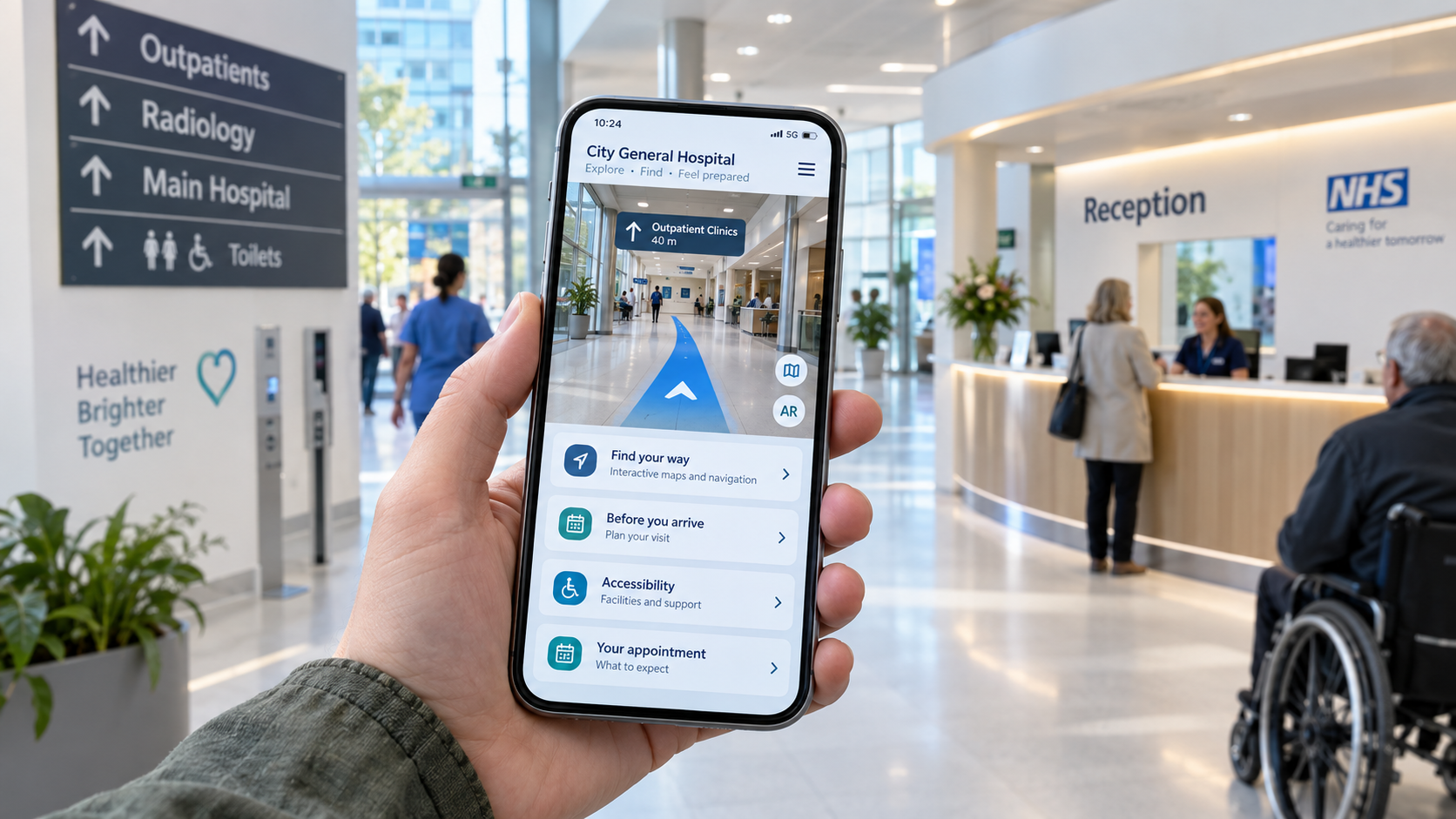
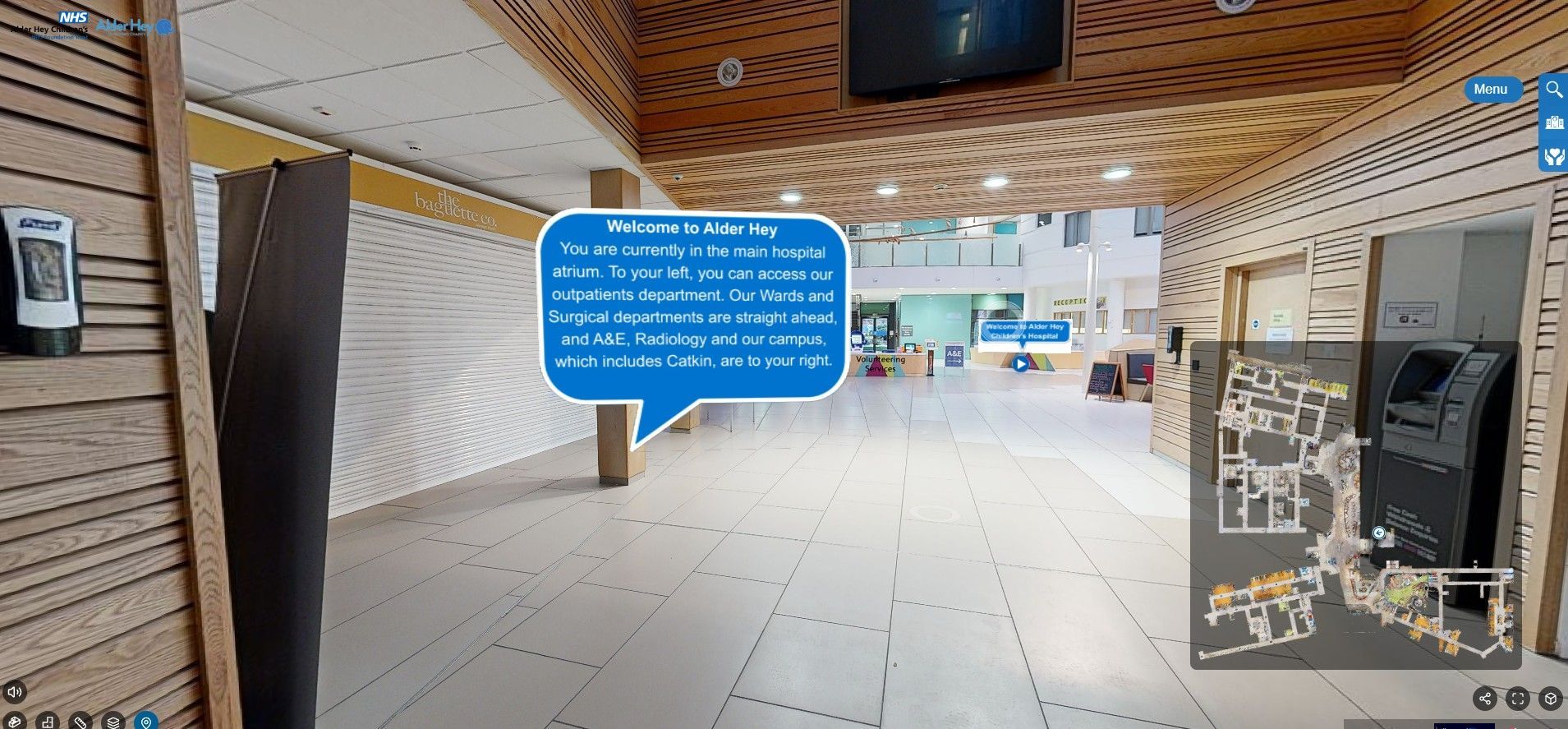
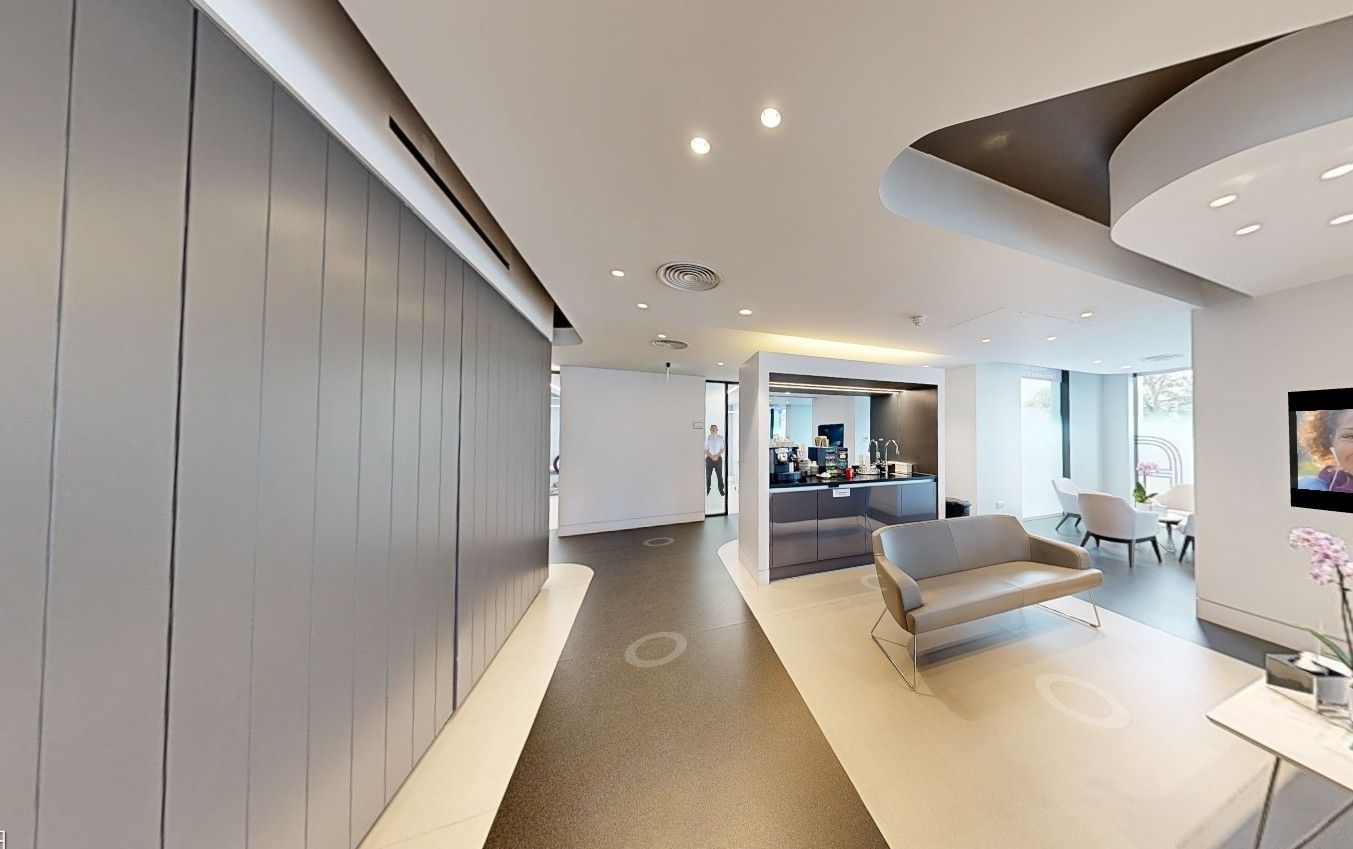
Patients increasingly expect healthcare communication to be as intuitive and accessible as the digital experiences they encounter in other areas of their lives. They want to feel prepared, not simply informed. This is where immersive, visual technology bridges the gap by allowing patients to digitally step inside a facility and explore it at their own pace before their visit.
Why Wayfinding Is About More Than Navigation
Wayfinding is often pigeonholed as an estates or facilities issue. In reality, it is a clinical and operational safeguard.
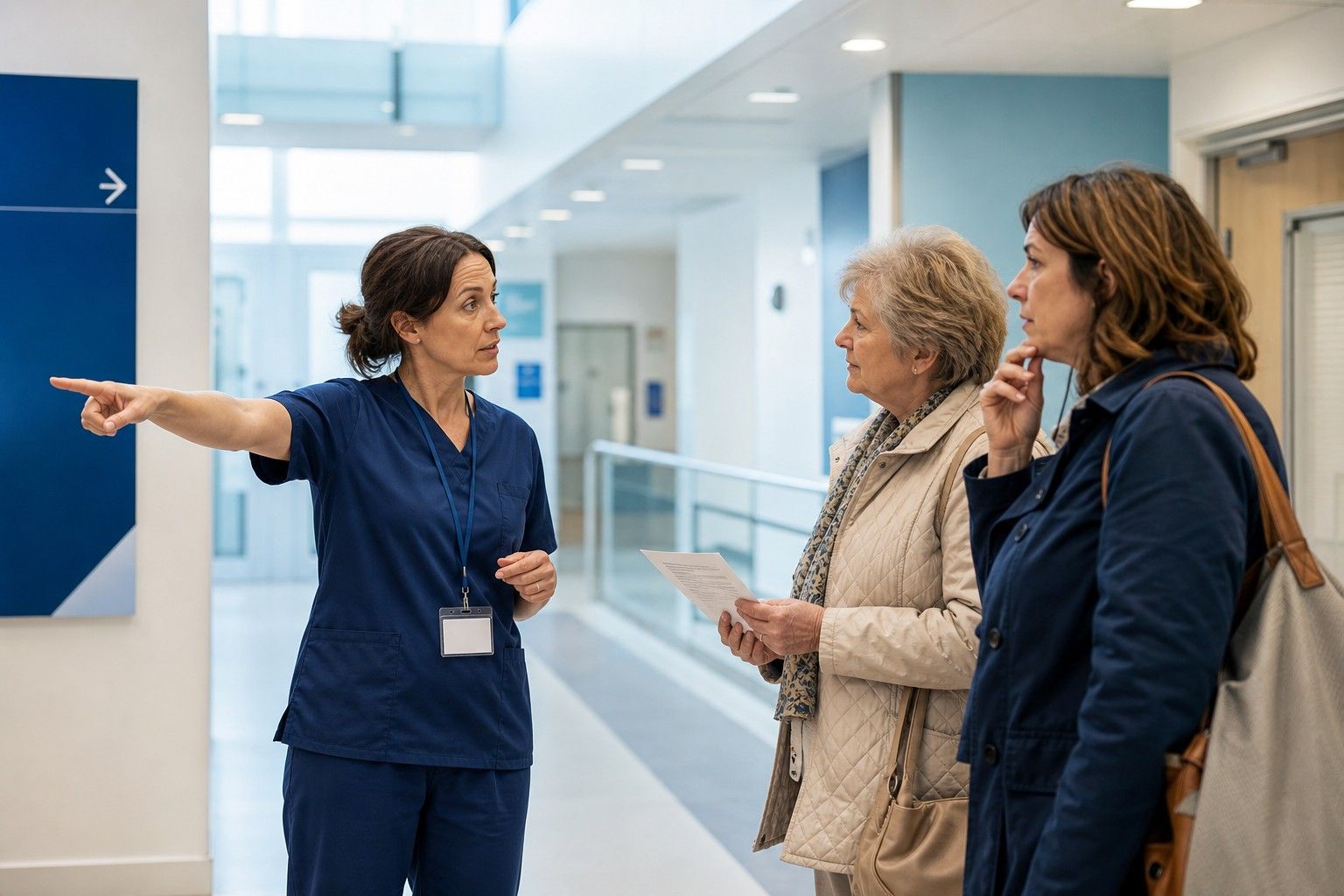
Every day, NHS staff spend valuable time helping visitors navigate healthcare environments. Reception teams answer directional queries, volunteers escort patients to departments, and clinical staff are frequently interrupted to provide directions.
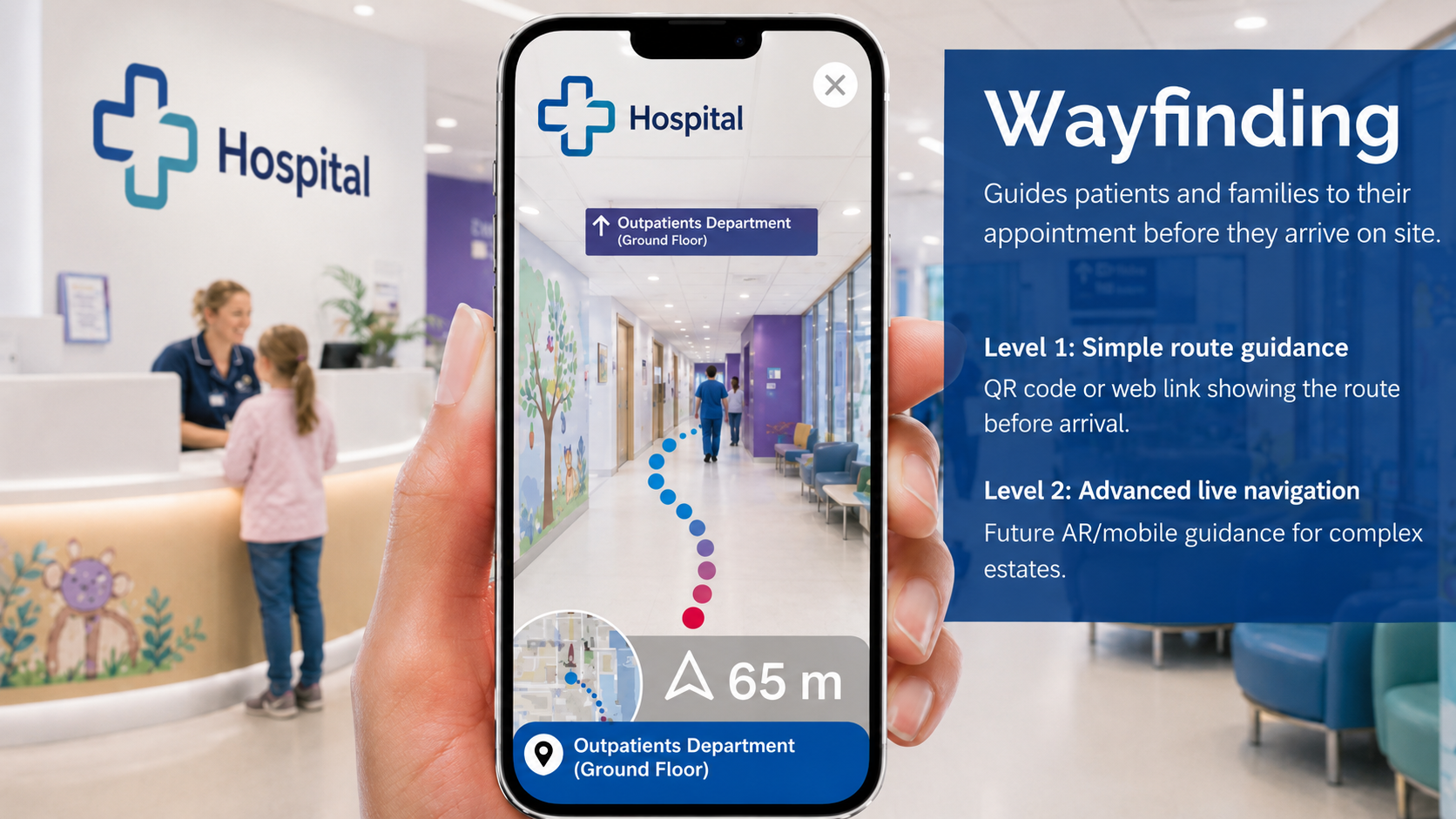
When significant numbers of patients struggle to orient themselves, it suggests that the journey is not as intuitive as it could be. Effective wayfinding should begin at home, not at the hospital entrance.
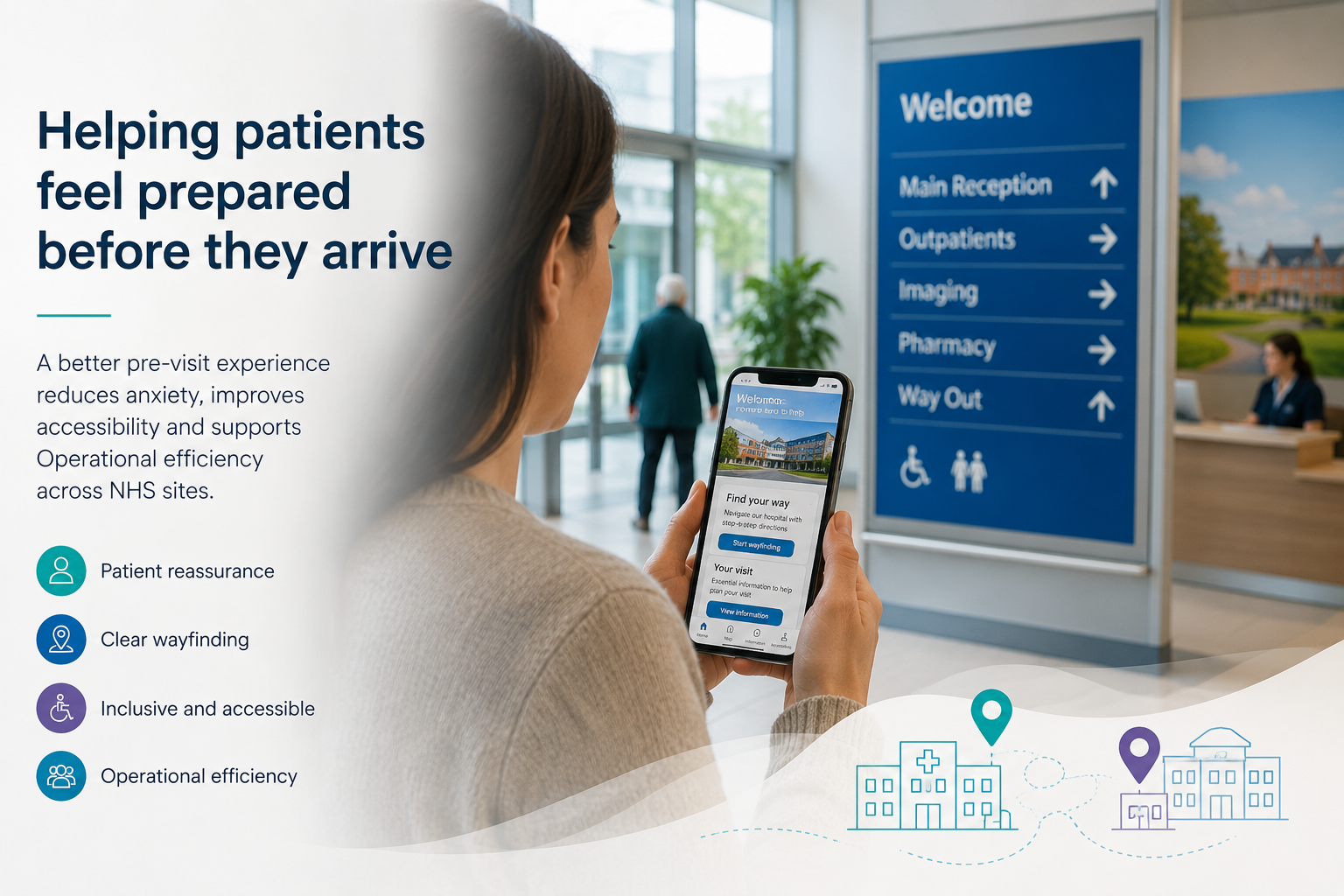
When patients have a visual understanding of the environment beforehand, they are more likely to arrive on time, feeling confident and prepared. This directly supports operational efficiency by reducing late arrivals and easing the burden on frontline staff.
Accessibility, Inclusion, and the Road Ahead
While physical accessibility remains essential, true inclusion involves reducing cognitive and emotional barriers.
As NHS organisations continue to focus on reducing health inequalities and improving equitable access to services, helping patients feel confident before arrival is becoming a strategic priority. Digital maturity should not be measured solely by the systems operating behind the scenes. It should be reflected in how effectively organisations support patients throughout their entire journey.
By helping patients feel familiar with a healthcare setting before they arrive, organisations can reduce uncertainty, build confidence, and create a more positive experience from the very beginning.
Because for patients, the appointment does not start when they enter the consultation room.
It starts the moment they receive the appointment letter.